Why Peoria AC Compressors Fail in July and What Emergency Repair Actually Costs
Calls for emergency AC repair Peoria AZ spike the moment the first 115-degree afternoon hits. Homes in 85381, 85382, 85383, 85345, and 85385 feel it first. The outdoor unit hums but will not start. The indoor temperature climbs two degrees an hour. By dusk, bedrooms in Northpointe at Vistancia and Westwing Mountain sit over 86. Compressors are the center of these emergencies. July punishes them in ways that do not happen in April. This article explains what fails, why it fails in Peoria’s Sonoran Desert heat, and what a real emergency visit costs in 2026.
July in Peoria is the perfect storm for compressor stress
Peoria’s July is not moderate heat. Design day load sits at 110 to 117 degrees on the Phoenix Valley floor. Vistancia and Northpointe at Vistancia sit roughly 18 percent above the valley floor in elevation. That elevation swing changes air density and heat transfer. Systems sized for valley conditions run closer to the edge at Northpointe. Add monsoon humidity and dust. The result is high head pressure inside the compressor for much of the afternoon.
July also stacks grid events. Late-day demand peaks as everyone cools homes before sunset. Voltage sags under load. Small voltage dips can stall a scroll Click here for more info compressor under pressure. That is when a weak run capacitor or pitted contactor tips into outright failure. Many emergency AC repair Peoria AZ calls begin with a single part that cannot handle the surge and heat together.
What fails first on Peoria AC systems during July heat
Field patterns are consistent across Arrowhead Ranch, Fletcher Heights, and Trilogy at Vistancia. The first weak link is the run capacitor. A run capacitor is a small can that stores a charge to help motors start and keep spinning. High attic and pad temperatures in July bake it. When it bulges or loses capacity, the outdoor fan or compressor does not start. The unit may buzz or click. If the fan blade turns slowly by hand but will not start under power, the capacitor is suspect.
The second weak link is the contactor. The contactor is a relay that applies power to the compressor and fan. July brings frequent on and off cycles during the hottest hours. Contacts arc. Once the faces pit and carbon builds, the contactor sticks or fails open. The result looks like a dead outdoor unit. In emergency AC repair Peoria AZ dispatch, contactors and capacitors account for a large share of same-day fixes before 8 pm.
Dirty condenser coils are the third driver. Haboob dust storms push ultra-fine particulate into the coil fins. One storm can put down the equivalent of a month of dust load. That is not a guess. After major haboob events along Lake Pleasant Parkway and Loop 303, technicians see condenser coil temperature and pressure readings as if filters had not been washed for 30 days or more. A fouled coil cannot reject heat. That drives condensing temperatures up and trips the compressor on thermal overload. The home feels like the AC is running but not cooling. In July sun, this escalates in minutes.
Refrigerant leaks surface in July. A system that limps along in May shows low suction pressure when the heat rises. With R-410A legacy systems now aging past 10 to 14 years, tiny evaporator coil leaks become visible under peak load. Low refrigerant pulls the evaporator below freezing. The coil ices. Airflow drops. The compressor runs without enough cool gas returning. Lubrication suffers. The result is short cycling and hot indoor air. Emergency AC repair Peoria AZ crews often encounter frozen coils behind wet filter racks by late afternoon calls.
Condenser fan motors also fail in July. Pads at homes in Sonoran Mountain Ranch and Tierra Del Rio sit in direct sun. Motor bearings dry out. Motor windings overheat. The symptom is a hot outdoor cabinet and a compressor that sounds labored. Without the fan removing heat, head pressure skyrockets. Thermal safeties trip. Prolonged run in this state can damage the compressor insulation.
Why compressors themselves fail in the Sonoran Desert peak season
Compressors fail for reasons that stack. High head pressure from a dirty coil or a weak fan motor forces higher amperage draw. Long duty cycles mean no recovery time. Voltage dips during grid peaks make hard starts tougher. By July, oil breakdown and internal heat lead to winding insulation damage. Thermal overloads click open. Over time, the internal motor burns. That is a non-repairable failure.
Variable-capacity inverter compressors from brands such as Trane, Carrier, and Lennox handle part-load better. They ramp slowly and manage pressure well when the coil is clean and airflow is correct. Under Sonoran dust, even inverters hit limits. If the condenser coil is caked after a haboob, the inverter will still run near maximum speed for hours. That heat soak is unforgiving. Proper coil cleaning stays critical regardless of technology.
Neighborhood-specific realities across Peoria
Homes near Lake Pleasant Regional Park and up Twin Buttes tend to sit in more direct sun with less mature shade cover. Systems there see higher afternoon condensing temperatures and steady winds that carry grit. Filters in 85383 often show more fine dust than identical setups in 85381 near the P83 Entertainment District. Northpointe at Vistancia properties report more constant full-capacity runtime on design days because of the 18 percent elevation differential from the Phoenix Valley floor. Technicians plan Manual J load assumptions differently for those addresses than for Old Town Peoria or Westbrook Village where afternoon shade and denser neighborhoods reduce exposure.
Arrowhead Ranch and Fletcher Heights have many R-410A systems installed between 2008 and 2014. These units are now 12 to 18 years old. The most expensive July failures there are compressor short-to-ground events. In many cases, the system is charged with R-410A and uses a PSC blower motor in the air handler. PSC motors run hotter and draw more in July. Upgrading to an ECM variable-speed blower during replacement can reduce static pressure issues and keep evaporator temperatures more stable. For repair calls, though, the immediate action is to isolate the failed part and get the home cool again.
What emergency AC repair actually costs in Peoria in 2026
Emergency AC repair Peoria AZ pricing varies by time of day, part availability, and system access. The numbers below reflect typical 2026 ranges that real Peoria homeowners see on invoices for July calls. These reflect upfront flat-rate pricing, not hourly plus parts surprise bills.
Emergency diagnostic fee during daytime runs between 89 and 159 dollars. After 6 pm and on weekends, the emergency diagnostic is usually 129 to 229 dollars. This covers arrival, system testing, and a written quote. Many contractors credit the diagnostic toward the repair if approved on site. Same-day early afternoon calls during an Arizona Extreme Heat Warning book fastest and carry the standard emergency rate. Late-night calls near Bell Road or Grand Avenue often add an after-hours premium of 100 to 250 dollars.
Run capacitor replacement is among the most common July fixes. Expect 180 to 420 dollars depending on capacitor size and access. Dual capacitors on larger condensers sit near the top of that range. Contactors run 220 to 450 dollars. If both parts fail together, the combined repair with testing is usually 360 to 700 dollars.
Condenser fan motor replacement costs more. Standard single-speed motors typically land between 450 and 900 dollars installed in Peoria. ECM condenser motors on variable-speed systems can run 800 to 1,400 dollars. Motors mounted in rooftop units along Loop 101 or P83 corridors may add lift or roof access costs for light commercial sites.
Refrigerant leak search and recharge is complex in 2026 because of refrigerant economics. R-410A, now a legacy refrigerant, often prices at 100 to 180 dollars per pound in July due to market pressure. A 3-ton system may hold 6 to 10 pounds depending on the line set length and coil. A recharge plus dye test can range from 650 to 1,500 dollars. If a leak is located and repaired, total tickets often run 1,100 to 2,000 dollars. If the system uses an A2L refrigerant such as R-454B, the per-pound cost is usually lower, typically 60 to 120 dollars per pound, but service requires A2L-rated tools and safety protocols. That adds a small handling line item in the 40 to 120 dollar range. EPA Section 608 certification and A2L training are mandatory for that work.
Evaporator coil replacements on older R-410A air handlers in 85382 are usually not done as an emergency same-day repair. The part cost and lead time push the job into a scheduled follow-up. Installed prices often land between 1,800 and 3,000 dollars depending on accessibility and brand. Many homeowners choose to apply that spend toward a full system upgrade when the AC age is 12-plus years and a compressor has high hours.
Hard-start kits, sometimes recommended after brownouts near Lake Pleasant Parkway, run 250 to 450 dollars installed. They can help scroll compressors start under heavy load. They are not a cure for a weak run capacitor or a blocked condenser coil. Expect a competent technician to explain when a hard-start kit helps and when it is a bandage that does not change core risk.
Full compressor swaps are the most expensive repair. For R-410A systems, the compressor part, refrigerant recovery, flush, filter-drier replacement, install, evacuation, and recharge typically price out between 1,800 and 4,500 dollars. Warranty status matters. Out-of-warranty compressors on systems older than 10 years often trigger a replacement discussion because a new outdoor condenser or a full system can be more cost effective per year of service.
Temporary cooling options during a multiday repair or a replacement wait are limited in July. Portable units help one room. Many Peoria homeowners arrange to stay with family for a night if the indoor temperature exceeds safe limits. Emergency AC repair Peoria AZ contractors prioritize vulnerable households during Arizona Extreme Heat Warnings and push same-day completion when any safe path exists.
What a legitimate emergency service visit should cover without wasting time
Time matters when the thermostat reads 90. A proper emergency call in Peoria focuses on the items that decide cooling fast. The technician verifies the thermostat demand and control board signals. They confirm the contactor pulls in and check voltage drop. They test the run capacitor under load and meter amperage on the condenser fan and compressor. They read suction and head pressures and convert to superheat and subcool under 110-plus ambient conditions. They clear blocked condenser fins that you can see with the eye. If refrigerant is low, they identify whether ice is forming at the evaporator, explain options, and stabilize the system where safe. They reset any float switch at the condensate drain only after clearing the trap. They do not pad the visit with upsells that do not restore cooling.
The 2026 refrigerant transition and what it means for July emergencies
The reality in Peoria this summer is a split fleet. Many homes still run R-410A systems that were installed between 2010 and 2021. New residential AC and heat pump installations manufactured for 2026 use low global warming potential A2L refrigerants such as R-454B or R-32. That change affects both repair economics and availability. R-410A is still supported, but parts and refrigerant costs continue to rise as the phaseout advances. A2L systems require technicians trained in A2L safety protocols and carrying rated tools, leak detectors, and ventilation practices.
For emergency AC repair Peoria AZ calls on new A2L equipment, the practical difference is not the cooling feel. It is the service handling. The tech uses A2L-rated recovery machines, follows ventilation rules when brazing, and confirms leak-free operation with appropriate sensors. The homeowner sees a standard repair ticket, but the contractor’s credentials and gear matter more. That is why crews with EPA Section 608 Universal certification plus documented A2L training are in highest demand in July.
AC replacement cost signals during a July emergency
Some emergencies do not pencil out as repairs. Systems at age 12-plus with a failed R-410A compressor and a known evaporator leak ask for a bigger decision. In 2026, new central air or heat pump systems installed in Peoria meet the Southwest SEER2 minimum of 14.3. Many homes opt for SEER2 16 or higher for better part-load performance and lower summer bills. Variable-capacity inverter heat pumps from Bosch, Trane, Carrier, Lennox, and American Standard are popular because Arizona winters are mild. They cool like premium AC in summer and heat efficiently in January without using much gas. With the federal 25C tax credit expired on December 31, 2025, Peoria homeowners can no longer stack that federal credit with utility rebates. The APS rebate program also ended effective January 1, 2026 under Arizona Corporation Commission Decision No. 81584. That shifts the economics back to straight efficiency gains and any manufacturer promotions.
Emergency replacement quotes for a quality 3- to 4-ton split system including an ECM variable-speed blower, new condenser, matched coil, refrigerant line set flush or replacement, and start-up commissioning to the ACCA Quality Installation Standard typically land between 10,000 and 16,000 dollars in 2026 in Peoria. Homes in 85383 with duct design issues may add Manual D duct corrections. That adds material and labor but can drop static pressure and bring supply temperatures back in line. Expect a free in-home estimate for replacements, not a guess on the porch. Manual J load calculation adjusted for Sonoran Desert design conditions and the Vistancia elevation differential matters for the next 15 years of runtime.
A shareable local fact that changes what July feels like
SRP and APS observe summer heat protections for residential customers. During July and August, utilities in the Phoenix metro do not disconnect power for nonpayment during active Extreme Heat Warning conditions. That policy reduces life-safety risk during the deadliest month. It does not cool a home with a failed compressor, but it matters. Property managers in Peoria and Sun City West plan dispatch with this in view because tenants remain in place during heat events. This policy is often missed in national reporting and is a strictly local reality tied to Arizona’s Extreme Heat Warning protocol.
Commercial and light commercial emergencies across Peoria
Peoria businesses along Bell Road, Happy Valley Road, and Grand Avenue run rooftop units that cook under July sun. Tenants call when air off the vents feels tepid and the dining room sits at 82. Rooftop unit failures resemble residential patterns. Capacitors and contactors fail first. Dirty condenser coils after a haboob cause high head pressure. Inverter boards on newer RTUs from York and Lennox fail after power surges. Lightning during monsoon cells near Lake Pleasant triggers control board failures. Emergency AC repair Peoria AZ response for commercial addresses often includes after-hours access, crane coordination for heavy swaps, and clear written quotes that match leases. Most calls target same-day stabilization and a follow-up for larger parts.
Dust, filters, and why clean airflow protects compressors in July
Airflow is the quiet factor. A MERV 8 filter works for basic protection but loads fast in haboob season. Many Peoria homes upgrade to MERV 11 or MERV 13 to catch finer dust and protect the evaporator coil. The tradeoff is higher resistance. That is where an ECM variable-speed blower helps. It adapts to maintain airflow and keeps coil temperature stable. In July, a starved evaporator makes the compressor’s job harder because suction gas returning to the compressor runs colder and oil circulation is less reliable. A clogged condensate drain during humid monsoon nights can also trip a float switch and shut the system down completely. A quick clear restores operation. That is a frequent late-night emergency AC repair Peoria AZ call after dust turns to sludge in the drain trap.
Power quality, surge events, and July failures
Monsoon lightning seldom hits a home directly, but surges travel through the grid. Control boards, ECM blowers, and inverter drives are vulnerable. Homes near Arrowhead Towne Center and along Loop 101 experience repeated small spikes in storm weeks. Surge protection at the condenser and the air handler reduces risk. When a board is already stressed by heat, a surge pushes it over the edge. Signs include erratic fan starts, random shutdowns, and error codes on premium thermostats. Emergency visits during storm weeks often combine a board replacement with a recommendation for simple surge protection on the HVAC circuit.
SEER2 ratings and what they mean during a July emergency
Efficiency ratings are not academic during a heat wave. SEER2 14.3 is the Arizona Southwest minimum. SEER2 16 and higher equipment holds coil temperatures and pressure better at part load. That means fewer on off spikes and steady cooling during the late afternoon when the sun blasts west-facing walls in Westbrook Village and Happy Valley Estates. With the 25C federal tax credit expired, the case for SEER2 16-plus is made in bill savings and comfort, not a tax form. During an emergency, the immediate priority is to stabilize cooling. For homes with repeated capacitor and contactor failures, a planned upgrade to a variable-capacity inverter system and ECM blower before next July often ends the pattern.
Load and duct realities that mimic a failing compressor
Not every hot call is a failed compressor. Some Peoria homes in 85345 were built with undersized return air ducts. High static pressure forces the blower to work harder and starves the evaporator. The thermostat never satisfies in late afternoon even while the compressor runs fine. Manual D duct design corrections create real capacity in a way a capacitor cannot. In Vistancia and Blackstone at Vistancia, multi-story floor plans often need zoned HVAC with zone damper installation to handle afternoon solar exposure on different wings. Without zoning, a healthy compressor is forced to run flat out as a bandage.
Brands, parts, and realistic availability in July 2026
Carrier, Trane, Lennox, Rheem, Goodman, American Standard, York, and Bryant parts are generally available in the Phoenix metro. During the first big heat wave, capacitor shelves empty for a day or two. Supplies normalize quickly. Inverter boards for some Bosch IDS and Mitsubishi Electric units may have a few days lead time. Fans and contactors remain same-day for most models. R-410A coils are harder in late model years because manufacturers have shifted to A2L product lines for 2026. A transparent contractor explains if a temporary repair will hold while a part ships or whether a safe stopgap exists that buys time.
What keeps July repair totals from spiraling
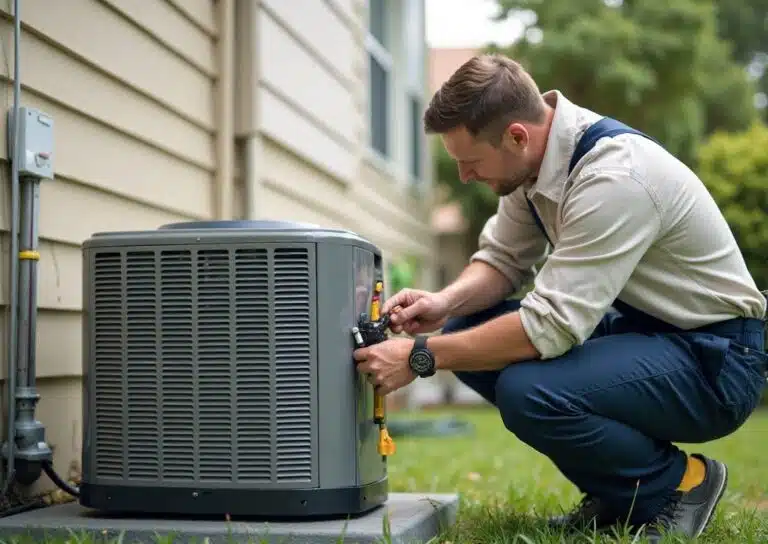
Three things keep July tickets in check. First, quick diagnosis. Testing the capacitor and contactor under load in the first minutes on site narrows the path. Second, clearing condenser coils the right way. A proper rinse in the direction opposite airflow and with the shroud removed when needed drops head pressure immediately. Third, being honest about refrigerant. Topping off without chasing a leak is a last resort in July to stabilize a home overnight. The follow-up should include proper leak detection, not a repeated top-off cycle that drains wallets.
How Peoria’s heat policy and scheduling change emergency response
During Arizona Extreme Heat Warnings, crews sequence calls with health risk in mind. Homes with infants, seniors in Trilogy at Vistancia, or medical equipment are higher priority. The SRP and APS summer heat shutoff moratoriums during July and August mean more households stay in place even if a bill is past due. That increases call volumes. The smartest way to get same-day service on a peak day is to call by mid-morning. By noon, routes fill through evening. Emergency AC repair Peoria AZ providers plan crews in shifts to keep after-hours coverage steady through midnight without eroding next-morning capacity.
The quiet value of preseason prep in Peoria
Peoria homeowners who schedule AC tune-up and maintenance between February and May see fewer July emergencies. A preseason tune focuses on refrigerant pressure verification under controlled temps, blower motor amp draw testing, condensate drain clearing, and coil cleaning after winter dust. It is not a guarantee. It does, however, catch weak capacitors, worn fan bearings, and clogged drains before the first heat dome. For homes along Lake Pleasant Parkway where haboobs hit hardest, adding a MERV 13 filtration upgrade or HEPA whole-home filtration improves indoor air quality and keeps coils cleaner. A UV-C air sanitizer or a REME HALO unit can reduce microbial growth in humid monsoon weeks. Good airflow and clean coils make compressors live longer in July.
Emergency cost examples that match real Peoria invoices
It helps to see real combinations, not just line items. A Fletcher Heights home with a no-cool at 4 pm shows a bulged capacitor and a pitted contactor. The repair is a new dual capacitor, new contactor, coil rinse, and test. The ticket prints at 520 dollars plus a 129 dollar emergency diagnostic that is credited back. Cooling returns by 5:30 pm.
A Vistancia home on an R-410A 4-ton unit shows low suction, high superheat, and a dirty condenser coil. The tech clears the coil, adds three pounds of R-410A at 140 dollars per pound, installs a filter-drier, and tags the system for a follow-up leak search. The emergency restore is 1,020 dollars plus refrigerant and the after-hours fee of 150 dollars because the work completed at 8:15 pm. The homeowner chooses a dye test on a cool morning later that week.
An Arrowhead Ranch property with a variable-capacity inverter condenser has a failed ECM condenser fan motor following a monsoon surge. Part availability is same day. Installed price is 1,150 dollars. The system ramps normally after install. The homeowner approves a surge protector for 280 dollars to lower the chance of a repeat during the next storm.
Repair today, plan for tomorrow
Emergency AC repair gets a home safe and cool. Planning prevents the next 6 pm panic. That means verifying that the system is the right size under a Manual J load calculation adjusted for Peoria’s 110-plus design conditions and the Vistancia elevation differential. It also means Manual S equipment selection so compressors and evaporators match in capacity and control strategy. If ducts are restrictive, Manual D corrections remove backpressure that wears blowers and stresses compressors. If a home in 85381 near the Peoria Sports Complex was sized for the valley floor, but a move up to Northpointe at Vistancia occurred without a system change, a new compressor will inherit the same grind. The solution is capacity and airflow that fit the actual house and site.
What “upfront flat-rate pricing” means during a July emergency
Flat-rate means the number the homeowner hears before the work starts is the invoice total for that scope. It includes part, labor, and standard materials. It does not balloon because a bolt sticks or a wire is corroded. Emergency AC repair Peoria AZ contractors who quote flat-rate remove surprises when the house is already too hot to think about line items. Written quotes should state whether the diagnostic fee is credited, what the after-hours premium is, and whether refrigerant is priced per pound. That clarity matters as much as the wrench work.
Why local experience in Peoria makes the difference
Out-of-area technicians underestimate how Sonoran dust and monsoon timing change diagnostics. They may chase a board fault when a float switch tripped after a muddy drain clog. They may pull and replace a compressor without cleaning a coil that caused the original high head pressure. Local crews expect haboob coil fouling equal to a month of dust from a single event. They expect evening thermal soak on west walls near Lake Pleasant. They know Luke Air Force Base activities can influence brief voltage dips felt in nearby neighborhoods. That local pattern recognition gets cold air back faster.
Emergency AC repair Peoria AZ credibility and what to check at the end
A good visit ends with numbers. Suction and head pressures within expected ranges for the day’s ambient. Superheat and subcool in spec for the metering device, often a TXV in newer systems. Fan amperage within motor label limits. Supply air temperature drop near 18 to 22 degrees under steady state in a typical Peoria home. A note if filters are undersized or ducts are noisy. A reminder if the system uses R-410A and sits at 14 years old. A plan if the tech found a small leak and stabilized cooling for the night. That is what separates a quick fix from a professional emergency repair that holds.
Emergency AC repair Peoria AZ: ready when the temperature spikes
Grand Canyon Home Services is headquartered in Peoria at 14050 N 83rd Ave Suite 290-220. The team covers Peoria, Surprise, Glendale, Sun City, Sun City West, and the Greater Phoenix metro. The company is Arizona ROC Licensed, bonded, and insured, and maintains an active BBB Accredited Business profile. Technicians hold NATE certification and EPA Section 608 Universal refrigerant certification with current A2L training for R-454B and R-32 handling. Factory-authorized installer status spans Carrier, Trane, Lennox, Rheem, Goodman, American Standard, York, Bryant, Mitsubishi Electric, Daikin, LG, and Bosch. The dispatch center runs 24/7 for emergency AC repair Peoria AZ with same-day service during summer peak demand. Quotes are upfront flat-rate on every repair. Free in-home estimates are available for AC installation and AC replacement. Financing is available on qualifying installations. Manufacturer warranties and a workmanship warranty cover installed equipment and labor. Background-checked technicians arrive in marked vehicles. For emergency AC repair Peoria AZ today, call the office or request service online. The team restores cooling fast and documents the system so the next July hits differently.